Dog’s Spare Human Holds Phone in Cold Dark Street
Growing up in the ganglands of Whanganui, I learned that a mean bastard of a dog can deter most low-level trouble, whichever side of the fence you’re on. But we did not get a mean bastard of a dog.
When a mob of men advanced down our street, swearing at the night sky and bashing anything with the temerity to cross their line of sight, my first thought was: it’s okay, we have a dog. Growing up in the ganglands of Whanganui, I learned that a mean bastard of a dog can deter most low-level trouble, whichever side of the fence you’re on. These dogs are built low to the ground like cannons, with small, piercing eyes, vice jaws perfect for tearing open trespassing flesh, and legs rippling with muscle primed to explode. Come within a block’s distance and these dogs will issue a warning growl which so obviously portends your death your insides will liquify.
I poke my head out of the lounge doorway, hoping to observe the mob. It’s hard, because around here streetlights are only lit occasionally, and tonight is not one of those occasions. I don’t want to place my whole body into the hallway. It’s so brightly lit from the kitchen behind, my silhouette would be projected out to the street through the open front door. On this sticky summer evening, a thin magnetic fly screen is the only membrane between our family and casual street violence.
A slam out on the street vibrates through the matai floorboards, and my wife Vic pauses her knitting. It’s not unusual to hear the odd bang at night, but it’s usually one of our two children turning over and kicking a wall in their sleep. The voices are close now. I still can’t see much, but can hear more bangs, washed with a shifting mix of cheers and jeers, like a manic depressive tide. I can make out movement around our car. There’s a sharp crack, and the sound of something brittle snapping; some pounding, then the abrupt whumph of something hard but pliable caving in.
The shouts of the mob grow more raucous, but move further up the street. I step across the hallway to ease off the kitchen light so gently it doesn’t even make a click, then tiptoe to the front door. The lock mechanism is old, likely the original one from when this place was built in the fifties. To avoid the door’s distinctive CLACK upon locking, I hold the latch bolt open and manually ease it into place. Our front door is made of frosted glass etched with a stag paused at the crest of a wooded hill, bordered by a royal-blue wooden frame. When the streetlights are on, they project a shadow stag onto our hallway wall, like a sentinel.
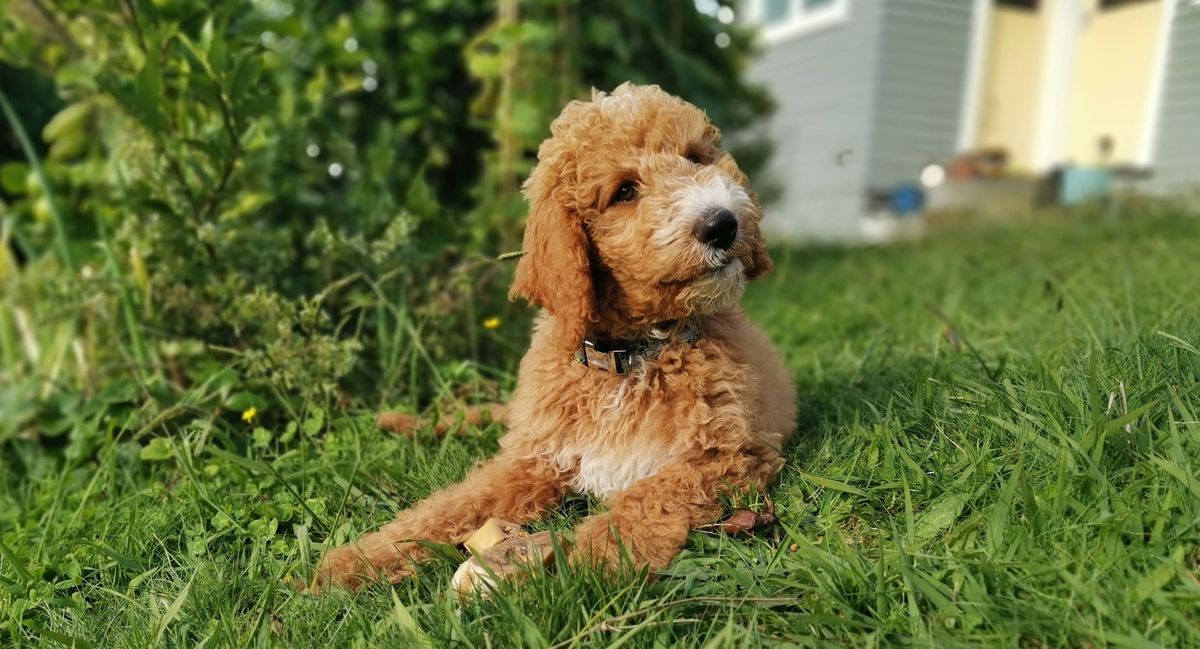
Back at the entrance to the lounge, I can see that my guard dog is asleep upside down on the sofa next to the street-side window, his heading lolling backwards off the edge, his ball sack in the air, his legs twitching to the wisps of some doggy dream vision. Only when Vic puts down her knitting and leaves the lounge does Teddy stir, opening one eye and sliding off the couch. He pushes his front legs forward, arches his back into a deep stretch, shakes his floppy ears, then slumps onto his bed in the corner, returning to a deep, oblivious slumber.
We didn’t get a mean bastard of a dog. I’d hoped that living in Paraparaumu might mean we wouldn’t need one; that we might bring a dog into our family that provoked joy over mortal dread. Less Cujo, more Lassie.
The dog we found was originally meant to be shipped to Japan as a therapy dog, to enrich the life of some child in need – when the borders closed and not even a wee pup could travel. Instead the dog came to us, and although he did not receive whatever special training a therapy dog receives, it was clear that he’d been bred for the temperament you’d expect.
When we first saw this dog bouncing up our garden path, he looked so much like a soft toy he basically named himself. At the time we didn’t know that “Teddy” is such a common name for poodly crosses like him that some of his litter mates were also named Teddy.
Imagine the human equivalent:
“Dad – why are two of my brothers also called David?”
“Well, son, sometimes when you’re onto a good thing, you’ve got to ask yourself: ‘Why change?’.”
When we’re out walking Teddy, Vic shows no embarrassment talking to other dog owners about his lineage.
“What breed is he?” an old woman asked us outside a Paraparaumu Beach cafe, gently running a hand over Teddy’s woolly neck.
“His mother was a labradoodle-retrodoodle cross,” Vic said. “But his father was full poodle.”
I struggle to use words like “retrodoodle” or “golden doodle” in casual conversation. They sound like ornate sex toys for antique lovers. Surely the coiners of these terms were only in it for the laugh. I imagine them whispering in my ear: Say it airily with a straight face and an oat milk latte in your hand.
If I’m on my own and I get asked the question, I come at it from a different angle.
“Oh, I don’t know,” I said to a retired couple outside their beachfront mobile home. “There’s a bit of labrador, some retriever, and yeah, maybe some poodle too.” As though Teddy is just some random mongrel we chanced upon at the pound.
I didn’t grow up with a dog. Instead, my family lived with an endlessly multiplying clowder of inbred, semi-feral cats. I’m sure the prospect of regularly discovering a fresh batch of newborn kittens in the hot water cupboard would delight most people, but the novelty wears off. We couldn’t feed them all, so I knew these kittens would grow up to steal the crumbed schnitzel off the plate right in front of me, like all the rest. We were not a family of means.
I’m coy about Teddy’s pedigree to strangers because I fear to be more specific would make me appear a pretender to the upper crust. Nor would I ever elaborate on his purchase details: that we paid through the roof for this particular breed, in this red-orange hue, with this hypoallergenic, non-shedding perm finish. Yet it’s impossible to conceal our pet expenditure from friends and acquaintances, who know that back at home we also have four oriental shorthair cats, each selected by Vic in the tradition of her own upbringing – always an exquisite Siamese cat at her side – from the upmost top shelf possible for domestic animals. Vic’s Trade Me listing sort default is “Most expensive first”. Our most embarrassing cat asset is Mango, a “red” oriental shorthair bred to look somewhat like your average ginger tomcat, only with a sleeker, posher body. A bourgeoisie feline masquerading as a member of the proletariat.
Teddy shares at least some of my shame. I see it in the way he behaves in front of breeds closer to the ancestral wolf: the German Shepherds, Huskies, and Malamutes. Normally he rushes up to circle dogs of all persuasions and sniff their arse, his foxy tail brushing back and forth. But with these bigger dogs, he hangs back. He dips his head and lowers his tail. These distinctly doggier dogs, holding their heads high, appraise Teddy’s fetching orange curls, the cutesy white patch on his chest in the shape of a star, and say with their eyes, “You look a right sheep with that perm, mate.” Surely no crueler jibe could pass from one descendant of the wolf to another.
I might expect more from Teddy than what I’ve put in.
It was Vic who slept alongside Teddy on that first night with us, when he was a scared pup in a new place. Later, when we were allowed out, Vic would regularly hit the local dog park to socialise Teddy with a liquorice all-sorts pack of dogs, something I would never do because the place is a mine field of dog shit, and well, there are just too many dogs. Vic had basset hounds throughout her childhood, but I’m new to dogs. The dog park feels too out of control, like we’re in the wild surrounded by half-crazed, reverse-evolved wolves. Which is exactly why Teddy and every other dog there loves it. It’s Pure Dog.
Vic’s tender care need not paint me a slacker. But I devoted myself to Teddy in a different way, taking on the role of chief trainer. Back when we all had to stay at home, I speed-read Mark Vette’s Puppy Zen and spent several months training Teddy on how to come when called, stay when told, and not eat shoes. I used a training clicker to mark each snapshot of correct behaviour. CLICK. Give Teddy a treat. CLICK. Give Teddy a treat. CLICK. Give Teddy a treat. Who exactly is the clicker for? I wondered, as I gave him another treat. Most of what I tried to inculcate in Teddy sunk in, although I can’t be sure whether it was the clicker or the treaty bribes. In the eyes of a young Teddy, Vic brought more of the love while I brought more of the discipline, so he probably thinks of Vic as mother and me as sergeant. Hopefully a nice sergeant, one that on a tough day you can wag your tail at without fear of reprimand.
Teddy does bring some innate detective-type skills to the estate. Should any of us unwrap a fresh block of butter, Teddy can hear the crinkle of the wrapper from the other end of the house. The sound will rouse him from the deepest sleep. But not just any wrapper: only the papery ripple of a pound of butter unfurling like a rich yellow flower of fatty goodness. When a future vet asks me how my dog got so fat, I’m just going to have to shrug and say, “I dunno man, he just loves that butter so damn much.” In a life-and-death situation where Teddy must choose between me and a full-size replica of me set in butter, I know which he would choose. It wouldn’t even be close.
The only time we really hear Teddy growl is when Vern, an old man who lives across the street, steps out his front door 30 metres away to put the rubbish bin out for collection. Teddy regards Vern with a primal suspicion reserved for exactly no one else, and lets out a guttural warning every time he senses him, summoning as much menace available to a dog who looks like a sheep. What can Teddy deduce about Vern’s strength of character that we cannot? Perhaps each week that rubbish bin contains a fresh dead body, and Teddy feels bound by duty to report neighbourhood murders committed by Vern.
Last and most certainly least: Teddy can sense menstrual blood. Sniffer dogs are usually guided towards specialisations like drugs or explosives, but without professional supervision, Teddy has strayed into sticking his nose into the crotches of women who are on their period. To our continuing embarrassment. I did not train him for this, I want to say to female friends who visit the house, but instead I just pull him back and apologise. I tried to raise an upstanding canine, but Teddy has turned out an unrepentant pervert. Which is another way of keeping people away from the house, but in this case it’s the wrong kind of people.
It probably wouldn’t’ve mattered if Teddy was a stone-cold killer guard dog. The neighbourhood already has a unique timbre, and it was naive to think one dog could make a jot of difference.
I witnessed a burglary while walking home from the train station on a cool autumn evening. A skinny guy, face shielded by a black hood, crept around the back of an op shop on Kāpiti Road. I heard a window smash. When I turned away from the op shop, round a corner and into a small park at the end of my street, I saw two stocky teenage boys standing around a green council rubbish bin that was on fire and collapsing into an acrid, molten pile. Metre-high flames lit their faces in orange and white. Their eyes followed me the whole time I walked through the park, daring me to remark on their freestyle bonfire.
Once I was out of sight of anyone who could identify me as a witness, I called the police station on my mobile. I was standing just outside my own fence, looking up the road towards the park. While I waited for the call to connect, I frowned at the muddy scar of fresh tyre marks mashed into our grass verge. Folks around here drive their vehicles up the gutter, sometimes over a neighbour’s verge, to park hugging their own fence. No one would use their garage for an actual car. Instead they’re all converted into storage units, workshops or beer dens. I can’t understand the hug-the-fence thing. I mean, these are not exactly Lamborghinis. I park my car on the curb like a rule-abiding citizen. And I stuff my garage full of second-hand fabric, books I’ll never read, and memorabilia I might not even remember.
The call connected. “So, I heard a window breaking and I’m pretty sure someone is inside that op shop on Kāpiti Road, the one a few blocks from the police station. And there are two boys standing around a plastic bin on fire in the park,” I said.
“Okay, thanks for letting us know,” the operator said, like this was just any other Tuesday.
Through the window I could see our household folding into its evening routine through a soft turmeric glow. Vic was chopping vegetables on the bench of our pantry-sized kitchen. Mango sat yawning on the windowsill, his legs tucked beneath him, looking like a honey-coloured suede tugboat. Teddy stood on the sofa next to the window, front paws on the window frame, regarding me silently with his caramel eyes, like I was a figure in a painting – Dog’s Spare Human Holds Phone in Cold Dark Street – part of a gallery collection of neighbourhood moments, all interesting pictures but ultimately of no relevance to a dog within his warm wooden den, completely at peace on a black leather sofa, a mere room away from his main human.
About a month later, working from home on an iron-grey winter afternoon, a squadron of armed defenders fanned out across the street outside my window. They were dressed in black, torsos bulging with protective gear and pockets, faces masked. Spread between these black figures were the standard-issue police, sporting pale-blue collared shirts, topped with a dark blue vest. They all held assault rifles. We don’t often see cops with guns around here, even in a holster. There are no holsters.
There was no communication with the neighbourhood. I was not instructed to get away from the place where people were arming themselves with guns. There was only the implied suggestion of a cop with an assault rifle looking at me looking at him.
Later, once the street had cleared of guns, I shared this episode with some neighbourhood friends. Anna, who lives across the street, heard that the law was descending on what she refers to as “that crack house”, a place with peeling weatherboards and a long overgrown lawn packed with cars in various stages of disrepair. The curtains are always drawn, and people are always coming and going.
Suzie and Eric, who live next door to the crack house, told us that the day those cops with guns came, someone was holed up inside the house with a gun in their hands and a chip on their shoulder.
The morning after an angry mob roiled down our street and Teddy didn’t even wake up, Anna messaged us. She wrote that there were about eight guys. One of them had a machete and he hacked up her letterbox.
“They ran up the road smashing stuff up,” Anna wrote. “This includes our car and unfortunately yours too. Wing mirror and dent on the driver side.”
Suzie messaged to say that her thirteen-year-old son, up late reading, saw it all through his window. The man with the machete hacked at a man from the crack house, and sliced his hand wide open. The hacked-open man got taken for surgery, Suzie heard.
It was 10:30am and I hadn’t even gone outside. After the noise of the mob had died down the night before, I hadn’t asked around to see if everyone else in the neighbourhood was okay. I’d checked on my children and gone to bed, thinking not of the mob or the street, but of a looming writing deadline and whether I’d turned off the fan in the lounge. I suspect my nomination for Neighbour of the Year will arrive any day now.
The incident made the news. The article reads: “A teenager has been arrested and charged after a person was found seriously injured at a Wellington address on Friday night.”
It was clearly written by someone who doesn’t know much about the Kāpiti Coast. Or geography. No one here calls Paraparaumu “Wellington”, because these are entirely different cities, with a 45-minute drive in-between. In fairness, the journalist might not have access to a map.
The article continues, lurching from my street in Paraparaumu to Nairn St in Wellington, ratcheting up the dramatic tension: “Meanwhile, a 23-year-old man has been arrested and charged with presenting a firearm, unlawful possession of a firearm, and unlawful possession of ammunition after armed police raced to Nairn St in Mt Cook on Thursday after being told someone had shown a firearm from a vehicle.”
What was the link between the teenager and the 23-year-old man? Did the rest of the mob hop in a car after the machete stoush, brandishing guns from the window as they sped to Wellington, 45 minutes away? My mind tried to create a coherent story from these disparate factoids. It soothed me, to read this. There have to be people who are bad at things to make us feel better about our own failings – say, neighbourliness or dog training – and to give us a target to snark at for sport. Reportage like this truly is a public service.
The icing on this journalistic cake is the police statement: “Police believe this is an isolated incident and there is no ongoing threat to the community.” Don’t worry folks, they say between the lines, sure, there’s smoke – and a gun, and ammunition – but definitely no fire.
Vic was wearing her dog-print pyjamas when we finally stepped out, squinting in the sharp Sunday morning sunlight, to inspect our blue-green 2005 Mazda Premacy. I was barefoot and wore black stubby shorts and a threadbare grey t-shirt, like I’d dressed myself out of an eighties dumpster.
We could see that the back-rear panel on the street side was scratched and partly caved in. The wing mirror was fractured, and some of the glass hung off it by a thin sinew of plastic. I wandered up the street and observed that it was mostly cars parked against the curb which were damaged. Cars nestled against their fence were unmarked. The newspaper headline for a spinoff piece could read: Snobbery Prevents Local Man From Parking Car Safely.
When I came back, Vic was trying to push the fractured side mirror back into place.
“Sorry about your vehicle,” someone said, and we looked up to see a policewoman in her thirties, pale, with white-blond hair and a neat row of piercings through the cartilage on her right ear. Her leather boots looked brand new.
“What happened last night?” I asked. “We heard someone hacked at someone with a machete.”
“One person sustained very minor injuries,” the policewoman said, and pulled out a notebook. “Do you mind if I grab some details?”
She scratched away at her notebook as we shared our scant portion of the facts. Vic did most of the talking. I was distracted. The phrase “sustained very minor injuries” gnawed at me. A very minor injury is skinning your knuckles grating some cheese. Partly removing a person’s hand from their body with a blade deserves a different category, and a little gravity.
Over the top of our gate I watched Teddy emerge softly from the front door and pad back and forth across the grass, scouting for a toilet spot. Mango followed soon after, and slipped under the gate. Mango is a cat who loves to endear himself to visitors. Once, while we hosted our friends Stacey and Jay in our wood-lined dining nook, Mango climbed down through the neck hole of Stacey’s cashmere jersey and went to sleep, his head resting between the cups of her bra.
Mango joined us on the verge. He circled the policewoman a few times, then started to rub his neck against her boots. After a few moments she stopped writing and lowered her notebook.
“Did he just... nip me in the ankle?” she asked, gesturing at Mango with her pen.
“Oh, sorry,” I said. “That’s weird. He’s never done that before.”
“I’m totally okay with it,” she says. “I have three cats at home.”
Yes, but what kind, I wondered.
The policewoman knelt to stroke Mango, but he turned the elegant angles of his expensive head away from her, and sauntered off up the street. It was only then I realised it was not the dog but the cat who would protect us, not with fear but as a perfect detector of clear and present bullshit. One who could separate the good actors from the bad. For that alone, I’d say he’s worth every cent.

Comments ()